
The Supreme Court rejected a PIL challenging the nationwide rollout of 20% ethanol-blended petrol (EBP-20), citing benefits to sugarcane farmers. The plea alleged incompatibility issues with older vehicles.
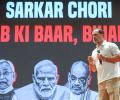
'Rahul Gandhi's problem is that he doesn't think big.' 'He looks more like an activist, while politics is like a game of chess. You attack and then defend and have a game-plan.'
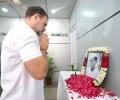
It was significant that the ceremony took place at 24, Akbar Road, the party's former national headquarters, and not at its new office in Kotla Road.

Jailed activist Sonam Wangchuk has appealed to the people of Ladakh to maintain peace and unity and continue with the ongoing struggle for statehood and safeguards under the Sixth Schedule of the Constitution in the true Gandhian way of non-violence, his lawyer said on Sunday.
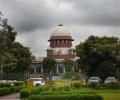
The Supreme Court reprimanded an Israeli businessman residing in India, questioning his presence in Goa while seeking to halt the repatriation of his two daughters and their Russian mother, who were rescued from a Karnataka forest.

The Supreme Court has permitted the sale and bursting of green crackers in Delhi-NCR for Diwali, relaxing the ban on green firecrackers as a temporary measure from October 18 to 21. The court has asked pollution control boards to monitor pollution levels and file reports. The order also includes measures to prevent the sale of non-compliant crackers.
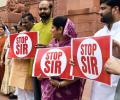
The Election Commission announced that it has received documents from 98.2% of electors in Bihar as part of the intensive revision of the voters' list. The deadline for claims and objections has been extended, allowing electors to rectify mistakes and submit necessary documents.
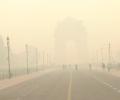
Delhi residents woke up on Tuesday to heavy grey haze darkening the city skies, reduced visibility and the air quality in the 'red zone' after many celebrated Diwali last night by bursting firecrackers beyond the two-hour limit set by the Supreme Court.
In May, 40 Rohingyas were blindfolded and flown to the Andaman and Nicobar islands and then thrown into the sea and made to swim to an island in Myanmar. And after the Pahalgam attack, at least 300 Muslims were 'pushed back' to Bangladesh from Assam.

The Supreme Court has directed the Bihar State Legal Service Authority to assist voters excluded from the final electoral rolls in filing appeals with the Election Commission.

The Supreme Court on Friday modified its August 11 direction prohibiting release of stray dogs from pounds in Delhi-NCR and said the picked up canines should be sterilised, vaccinated and released back in the same area.
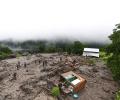
A bench of Chief Justice B R Gavai and Justice K Vinod Chandran also issued notices to the Union Ministry of Environment, Forest and Climate Change, the National Highway Authorities of India (NHAI) as well as the governments of Himachal Pradesh, Uttarakhand, Jammu and Kashmir and Punjab.

'The directives to enhance last-mile funding, consider revival funds, and systemic reforms across the sector are expected to revive stalled projects, improve accountability, and accelerate the delivery of affordable and mid-income housing.'
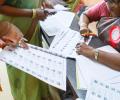
The Supreme Court declined to entertain a plea seeking a special investigation team (SIT) probe into alleged electoral roll manipulation in Bengaluru Central and other constituencies, advising the petitioner to approach the Election Commission of India.
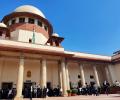
The Supreme Court has issued a directive mandating the complete disposal of leftover food inside its court complex to prevent animal bites, following concerns about stray dogs roaming the premises.

The Supreme Court is considering relaxing the ban on firecrackers in Delhi-NCR ahead of Diwali, citing practical concerns and the need to balance environmental and livelihood interests.

Referring to the fatal incident that has so far claimed 41 lives, head of the panel and Bharatiya Janata Party MP, Hema Malini said that political rallies should be properly organised and conducted with full security.
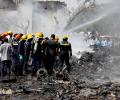
Civil Aviation Minister K Rammohan Naidu assures a clean investigation into the Air India plane crash, dismissing concerns of manipulation. The statement follows calls for a judicial probe and criticism of selective leaks from the preliminary report.
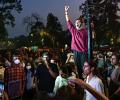
'It is high time to recognise that this is the greatest issue India is confronting.' 'Even the BJP should be raising concerns because polluted air suffocates everybody's child.'

The Supreme Court has directed the Delhi government and civic bodies to address the 'extremely grim' stray dog menace by picking up strays and housing them in shelters for sterilization and immunization. The court also warned against obstructing authorities and ordered the creation of a helpline for reporting dog bite cases.

The Supreme Court has sought responses from the Centre and Union Territory of Ladakh regarding the detention of climate activist Sonam Wangchuk under the National Security Act. Wangchuk's wife filed a plea seeking his release. The court has scheduled the next hearing for October 14.
Gitanjali Angmo, wife of climate activist Sonam Wangchuk, has filed a plea in the Supreme Court seeking his release from detention under the National Security Act. Wangchuk was detained following protests in Ladakh. The plea challenges his detention and alleges violations of due process.
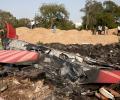
Father of deceased pilot and Federation of Indian Pilots petition Supreme Court for a court-monitored inquiry into the Air India flight AI171 crash in Ahmedabad.

Jammu and Kashmir BJP leader Jahanzaib Sirwal threatened to resign from the party, citing Uttar Pradesh Chief Minister Yogi Adityanath's "unacceptable" remarks and the state police's "vindictive" attitude against the Muslim community.
Supreme Court judge Justice K Vinod Chandran on Monday recused from hearing a plea seeking directions to authorities to investigate allegations made by US short seller Viceroy Research that billionaire Anil Agarwal's mining conglomerate was "financially unsustainable" and posing severe risk to creditors.
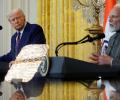
The Trump administration has told the US Supreme Court that it imposed tariffs against India for purchasing Russian energy products as part of its strategy to address the war in Ukraine.

The Supreme Court on Tuesday barred Karnataka Police from taking any coercive steps against badminton player Lakshya Sen, his family members, and coach over allegations of forging birth certificates.
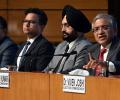
This is the third meeting of CEOs after Gyanesh Kumar took over as the chief election commissioner in February. However, Wednesday's day-long meeting assumes significance as the preparedness of a pan-India SIR are being discussed, officials said.
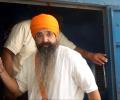
The Supreme Court has questioned the delay in the hanging of Balwant Singh Rajoana, convicted in the 1995 assassination of former Punjab CM Beant Singh, despite the Centre calling it a 'serious offence'.

'It will be an explosion of zoonotic diseases from these places.' 'People will not be able to live or work for kilometres around these places where thousands of street dogs are kept.'
The Supreme Court has raised concerns about the lack of oversight in the monitoring of CCTV cameras installed at police stations across India, suggesting a need for AI-driven, intervention-free control rooms.

Pat Cummins captured the sentiment perfectly, calling this potentially the 'last chance' for fans Down Under to witness these legends in action. With both stalwarts set to be 39 and 40 respectively by the 2027 World Cup, every appearance carries added significance. Ro-Ko have been the heartbeat of Indian cricket for over 15 years. Their return brings an emotional lift to the team and raises expectations for the series against the world champions.

The Supreme Court on Friday upheld JSW Steel's Rs 19,700-crore resolution plan for debt-ridden Bhushan Power and Steel Limited (BPSL), bringing down curtains to a prolonged legal battle that spanned nearly eight years.

A two-judge bench of the top court had on August 11 directed authorities in Delhi-National Capital Region (NCR) to start picking up stray dogs from all localities "at the earliest" and relocate the animals to dog shelters.

The Election Commission is preparing to roll out a special intensive revision of voter lists across India, potentially before the end of the year. Most voters may not need to provide additional documents if they are already on the electoral roll from the last special intensive revision in their state.

The home ministry said the central government would continue to welcome the discussion with LAB and KDA through the high powered committee on Ladakh or any such platform.

The BJP's MoSha leadership are past masters in encouraging defections from their allies if it helped their party capture the chief minister's chair. In Bihar, they are not sure if JD-U MPs and MLAs would be willing to cross over to the BJP if the Nitish leadership came on top -- and the NDA crossed the halfway mark together, observes N Sathiya Moorthy.

Heated arguments were also witnessed when BJP leaders and others accompanying Kangana tried to pacify the residents, and police had to intervene to restore peace.
'His willingness to take the initiative to fight for truth and justice and his willingness to cross swords with anyone for a just cause.'
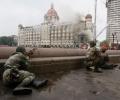
The Maharashtra government informed the Bombay High Court that Faheem Ansari, acquitted in the 26/11 terror attack case, was denied a police clearance certificate due to ongoing suspicion of being a member of a banned terror organization. Ansari sought the certificate to operate an autorickshaw.
 © 2026 Rediff.com - Advertise with us - Disclaimer - Privacy Policy - Sitemap - Feedback - About us - Terms of use - Grievances